Introduction
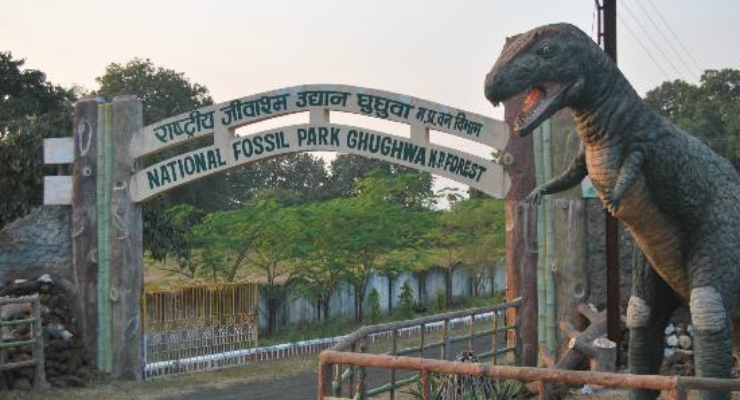
Ghughua Fossil National Park is a unique protected area in Madhya Pradesh devoted to preserving fossilised remains of ancient flora — especially plant fossils dating back millions of years.
This park offers a rare window into Earth’s geological and botanical past, showcasing petrified wood, leaf, fruit and seed fossils from eras when the region had very different climate and vegetation. Visitors get a chance to see fossil evidence of ancient forests that existed tens of millions of years ago — a must-visit for geology and nature enthusiasts.
Location & Landscape
-
Location: Ghughua Fossil Park is located in village Ghughua, in the Dindori district of Madhya Pradesh. It lies about 70 km from Dindori town.
-
Area: The fossil park spans roughly 75 acres (approximately 30–35 hectares) — a compact but remarkable preserve of ancient natural history.
-
Terrain & Setting: The site sits amid gentle hills and forested terrain typical of central India’s deciduous landscape. Fossils are displayed both in-situ (on open fossil trails) and inside a museum/interpretation center for study and viewing.
Due to its modest size and location, Ghughua offers a manageable yet immersive experience — ideal for a half-day or full-day trip for visitors interested in geological heritage, paleobotany, or quiet nature exploration.
History & Scientific Significance
-
The fossil-bearing site at Ghughua was first systematically documented during the 1970s by researchers including Dr. Dharmendra Prasad — then a district official and honorary secretary of the local archaeology unit.
-
In 1983, recognizing its unique geological importance, the site was officially declared a Fossil National Park — making it a legal and protected heritage zone for preservation of ancient plant fossils.
-
Ghughua showcases fossils ranging between 40 million to 150 million years old, spanning significant geological periods including the late Mesozoic (Jurassic / Cretaceous) and early Tertiary eras.
-
Fossils belong to more than 31 plant genera across 18 botanical families, reflecting diverse ancient flora.
This makes Ghughua not just a tourist spot — but a living museum of Earth’s prehistoric vegetation and a significant resource for palaeobotanical research and education.
Explore Madhya Pradesh Wildlife
Tiger Reserves
Learn about MP’s famous tiger reserves including Kanha, Bandhavgarh, and Pench. Discover wildlife, timings, and conservation efforts.
 Read More
 National Parks
Explore MP’s national parks like Satpura and Panna. Rich biodiversity, guided tours, and family-friendly activities.
 Read More
 Wildlife Tours & Safaris
Book guided safaris, eco-tours, and wildlife adventures online. Expert guides and customized experiences available.
 Read More
 Conservation NGOs
Connect with local NGOs working to protect endangered species and empower communities across MP.
 Read More